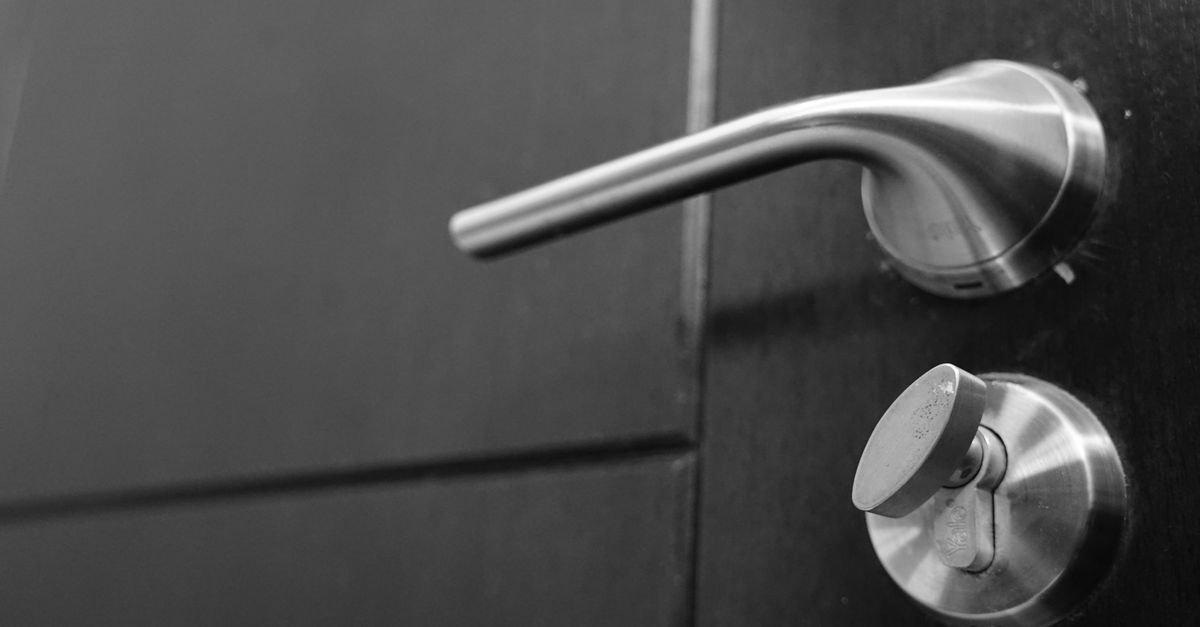
What Makes a Bedroom and Internal Door Lockout Different from a Front-Door Lockout
Internal doors — bedrooms, bathrooms, en-suites, home offices and airing cupboards — are almost never fitted with the same grade of lock as a front door. Rather than a 5-lever mortice deadlock or a multipoint uPVC mechanism, they typically use a simple tubular or cylindrical privacy latch with a small turn-button on one side and a narrow emergency slot on the other, or a basic mortice privacy lock that operates with a small cabinet-style key. Because these locks are built for privacy rather than security, a skilled locksmith can usually open them non-destructively in a matter of minutes using the correct tension and manipulation tools — something that is not always possible with a British Standard front-door lock.
The challenge is that the door furniture on internal doors is often older, poorly fitted, or painted over — particularly in the Victorian and Edwardian conversion flats that are common throughout Bermondsey's residential streets, from Grange Road to the quieter terraces near Leroy Street. Worn latches can stick, tongue bolts can drop, and the small emergency slots can become blocked with paint or debris. Our technicians assess each situation individually before choosing the least-invasive method, rather than defaulting to force.